Volatility is nothing new for fertiliser businesses. Energy price shocks, disrupted trade routes and uncertain supply have become familiar pressures. What is changing is how Europe understands the risks of dependency. Access to critical inputs is increasingly a question of industrial resilience and food security, not simply cost. That shift is prompting policymakers and businesses to look again at the nutrients and resources already circulating within the European economy.
It’s a good time for fertiliser manufacturers, traders and distributors to revisit their portfolios. Organic-based and circular fertilisers can complement mineral fertilisers, diversify nutrient sourcing and help meet a fuller range of farmer needs related to plant nutrition and soil health. This requires a disciplined assessment of what can become a reliable product, reach a customer and generate a return.
From resource into reliable product
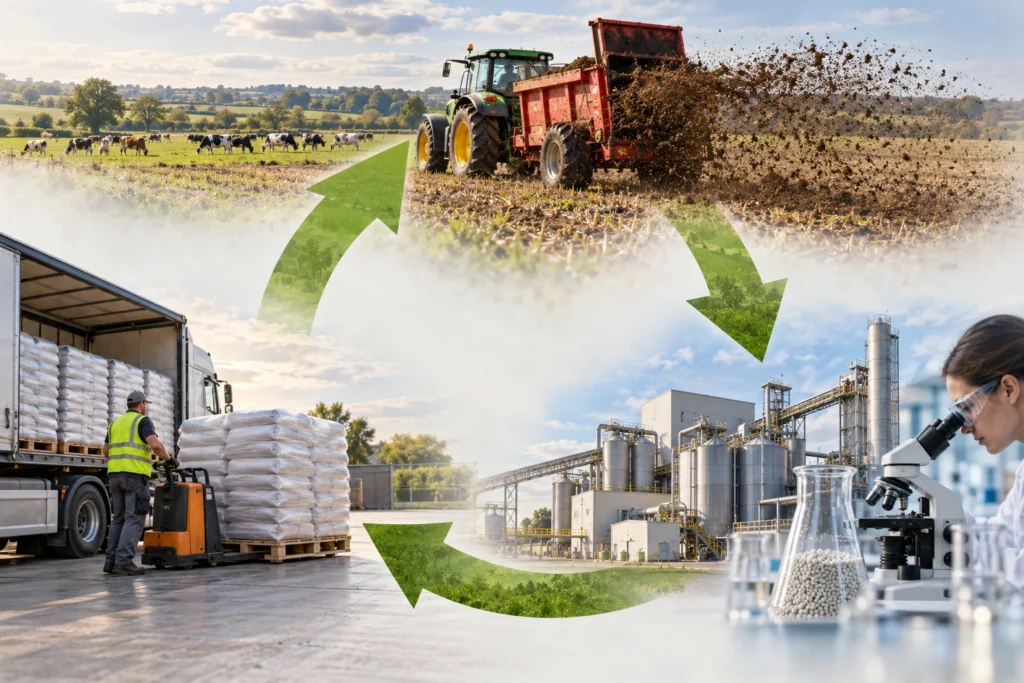
Europe has a wide variety of nutrient-rich resources that could be transformed into valuable fertilising products, including:
- Agricultural resources, including livestock manure and insect frass
- Resources from food processing and bioenergy production, including digestate
- Nutrients recovered from wastewater treatment and industrial processes
In regions with intensive livestock production, nutrients are not always used where they can deliver the greatest value, sometimes contributing to local environmental pressures. Processing suitable resources into safe, reliable and transportable fertilising products can create opportunities to reach customers across Europe, turning an underused resource into a commercial opportunity.
But reliable, high-quality fertilisers are more than just raw materials. Access to a resource stream is just the starting point for a solid business case.
Processing transforms raw materials into value-added products that can reach a wider market.
Stabilisation improves storage and hygiene. Concentration makes transport more economical. Standardisation and quality assurance give customers confidence in composition and performance.
Product viability has to be considered through the whole supply chain. Can distributors store and handle the product reliably? Can farmers apply it with existing equipment and use reliable information about its composition to optimise nutrient management? Can the value created support a commercially viable model for processing, quality assurance and delivery?
Companies should consider where their capabilities fit. The opportunity might lie in processing capacity, formulation, sourcing agreements or partnerships with established manufacturers.
Making the farmer’s investment worthwhile
A broader portfolio also creates opportunities to strengthen the resilience of one of the farmer’s most important productive assets: their soil. Organic matter can support soil structure, water retention and biological function. Where a product delivers those benefits, its value extends to helping farmers maintain productive capacity through difficult seasons.
That contribution needs to be demonstrated for the relevant soil, crop and management conditions. Farmers need a clear explanation of what a product contributes to their fertilisation strategy and why it merits the investment. Environmental credentials alone will not resolve questions about performance, convenience or price. Shifting from a product focus to a portfolio approach can allow companies to offer a more complete response to farmer needs.
Understanding which conditions could change
Many businesses have already explored these opportunities and found the economics difficult. Variable inputs, treatment costs and fragmented markets have held otherwise promising projects back.
But there are good reasons to revisit those assumptions. EU policy is beginning to address some of the barriers that have constrained investment. Changes under the Chemicals Omnibus could reduce regulatory costs for certain EU fertilising products, while work towards a criteria-based pathway for new materials and processes could open opportunities for innovations currently excluded from the single market. Alongside this, emerging measures under the Fertiliser Action Plan and other EU initiatives could help strengthen recognition and demand for bio-based and circular fertilising products.
Scenario planning helps companies to identify new opportunities triggered by reforms that could improve a future investment case. They also need to understand how rules governing inputs, processing and finished products interact.
The useful question is: changing which condition would materially improve a particular project? A wider market might justify processing investment. A clearer regulatory pathway might make a previously uncertain product worth developing. Better evidence of farmer value might strengthen demand.
Fertiliser companies have an opportunity to reassess where organic-based and circular products fit their growth plans, with commercial and regulatory decisions considered together from the outset.
At Prospero & Partners, we help businesses connect portfolio strategy with regulatory expertise and engagement in the policy decisions shaping their markets. If you are revisiting an investment or considering new fertiliser products, contact us to discuss how we can support your next steps.
To help companies address some of these challenges collectively, Prospero founded the European Consortium of the Organic-Based Fertiliser Industry (ECOFI) in 2014. We continue to serve the companies working together in ECOFI with our unique model of integrated strategic consulting and consortium management.